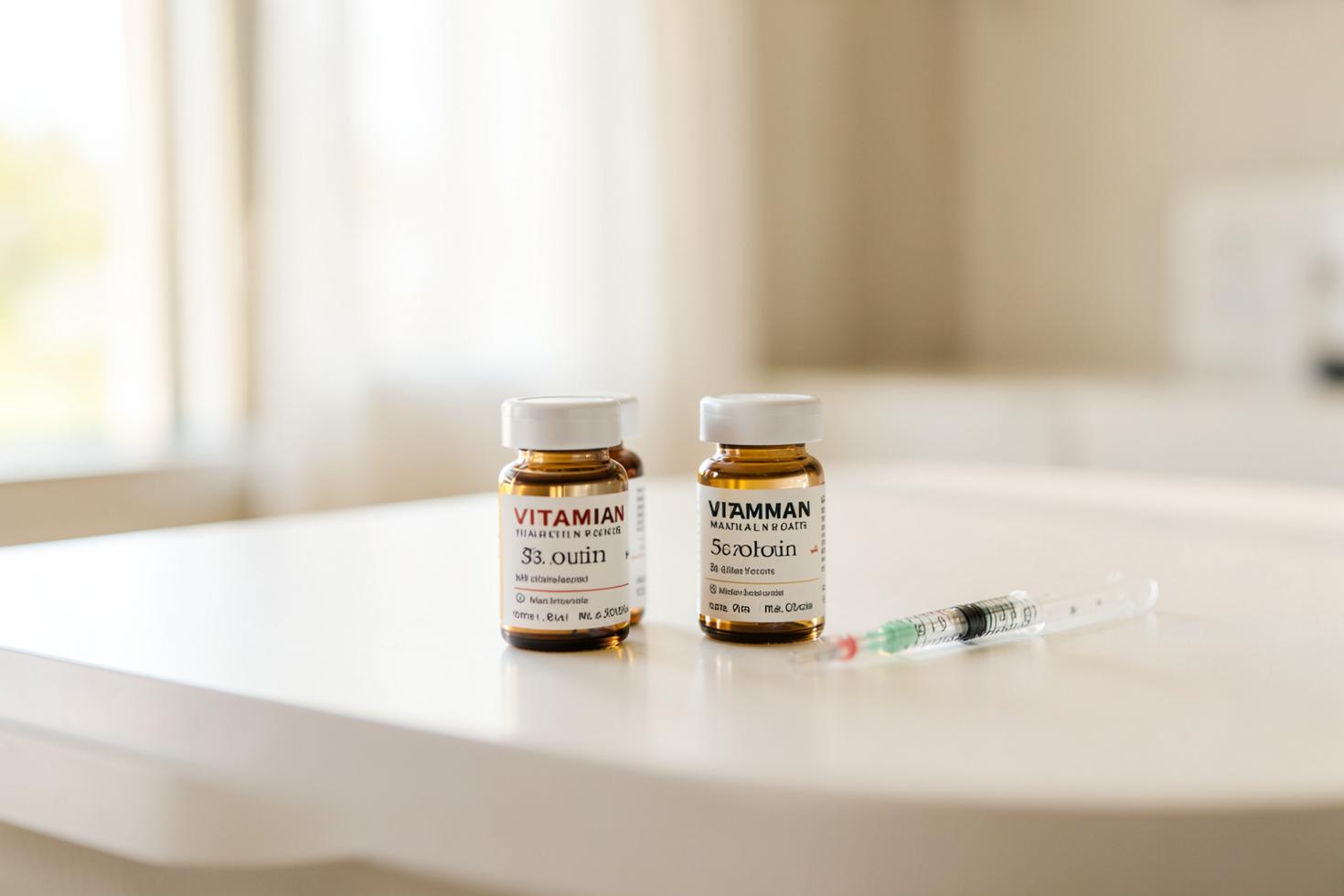
We offer four wellness injections at our Stroudsburg office: NAD+, MIC B12, glutathione and Tri-Immune. All four are intramuscular — a quick shot, usually under ten minutes from door to door. We do not offer IV hydration or drips, and we do not give any injection before a provider has reviewed your health history and medications.
This guide explains what is actually in each one, what it is reasonable to expect, who tends to benefit, and how these shots fit alongside the rest of your care. Wellness injections work best as a support to a plan, not as the plan itself.
Why an Injection Instead of a Capsule
An oral supplement has to survive stomach acid, get through the intestinal wall and pass the liver before any of it reaches your bloodstream. For several of these nutrients that process is inefficient, and for some people it barely works at all.
An intramuscular injection skips all of it. That matters most if you have had bariatric surgery, take metformin or a long-term acid reducer, live with celiac or inflammatory bowel disease, follow a strict plant-based diet, or are simply older — stomach acid declines with age and B12 absorption declines with it. If you have a healthy gut and eat well, a good capsule may serve you just as well for some nutrients, and we will tell you that.
NAD+: Energy at the Cellular Level
NAD+ (nicotinamide adenine dinucleotide) is a coenzyme your cells use to convert food into usable energy. Every cell in your body depends on it, and levels fall steadily as you age. It is also consumed heavily during periods of physical stress — illness, hard training blocks, poor sleep, chronic inflammation.
Patients typically come to NAD+ for mental clarity, focus and daytime energy, or for recovery after burnout, a long illness or an intense season of work. It is not a stimulant. The effect people describe is less like caffeine and more like the fog lifting — steadier attention rather than a jolt.
NAD+ injections can cause a warm flushing sensation during administration, which is normal and passes quickly. We usually start conservatively and adjust based on how you respond. NAD+ pairs well with peptide therapy for patients focused on recovery and performance.
Who Tends to Benefit From NAD+
Adults over 40 noticing a change in stamina and focus, people recovering from a prolonged illness, patients coming off a period of high stress, and anyone whose fatigue persists after sleep, thyroid and hormone issues have been addressed.
MIC B12: Lipotropic Support for Weight Loss
MIC B12 combines four ingredients. Methionine is an amino acid involved in fat metabolism and liver function. Inositol supports insulin signaling and fat transport. Choline helps the liver export fat rather than store it. Vitamin B12 supports energy production, nerve function and red blood cell formation.
Together the first three are called lipotropics — compounds that help the body process and mobilize fat. Used on their own, they do not cause weight loss. Used weekly alongside a real plan — a calorie deficit, adequate protein, resistance training and, where appropriate, GLP-1 medical weight loss — they are a reasonable support, particularly for the energy piece.
The B12 component is where the clearest benefit lives. Low B12 causes fatigue, brain fog, tingling in the hands and feet, and low mood, and it is common in people on metformin, acid reducers or plant-based diets. If your labs show it, correcting it can make a genuine difference in how you feel day to day. That is one of the reasons we run comprehensive metabolic lab testing before making recommendations.
Most weight loss patients who use MIC B12 come weekly. Some pair it with their GLP-1 injection schedule so it becomes one routine rather than two.
Glutathione: The Master Antioxidant
Glutathione is a tripeptide your liver produces and your cells use to neutralize oxidative stress. It plays a central role in phase II liver detoxification — the process by which your body conjugates and clears medications, alcohol byproducts and environmental compounds.
Oral glutathione is poorly absorbed; the molecule is largely broken down before it reaches circulation. That makes it one of the clearest cases for the injectable route.
Patients use glutathione for skin clarity and brightness, for support during high alcohol or medication exposure, and as part of a general antioxidant approach. It is commonly paired with NAD+ for energy and recovery, or with Tri-Immune during high-stress stretches. It is not a substitute for treating an underlying liver or metabolic problem, and if your labs suggest one, we address that first.
Tri-Immune: Immune Support When You Need It
Tri-Immune combines zinc, ascorbic acid (vitamin C) and glutathione in a single shot. Zinc is directly involved in immune cell function and is one of the few supplements with reasonable evidence for shortening the duration of a common cold. Vitamin C supports white blood cell function and is depleted quickly during illness and stress. Glutathione adds the antioxidant layer.
This is the injection people book before a flight, before a stretch of travel, at the start of cold-and-flu season, or at the first scratchy-throat hint that something is coming. Timing matters more here than with the others — immune support is most useful before or at the very beginning of an exposure, not on day four of a fever.
Tri-Immune is not a treatment for an active infection. If you are genuinely sick, you need an evaluation, not a shot.
How Often Should You Come In?
There is no single correct schedule, and anyone who promises one is selling a package rather than giving advice. In practice, MIC B12 is most often weekly for patients actively losing weight. NAD+ ranges from weekly during a recovery phase to monthly for maintenance. Glutathione is commonly every one to two weeks. Tri-Immune is situational — before travel, during a high-exposure season, or at the first sign of illness.
We set a cadence at your first visit and adjust it based on what you actually notice. If a month of injections has changed nothing, we stop and look harder at what else is going on.
What Wellness Injections Will Not Do
They will not fix low testosterone. They will not resolve perimenopausal symptoms. They will not produce meaningful weight loss on their own. They will not correct untreated sleep apnea, an unmanaged thyroid condition or insulin resistance.
Persistent fatigue in particular deserves a workup before it deserves a shot. The most common causes we find are iron deficiency, low vitamin D, thyroid dysfunction, low testosterone in men, perimenopause in women, undiagnosed sleep apnea and blood sugar dysregulation. Every one of those has a specific treatment, and a vitamin injection is not it. That is why our approach starts with comprehensive lab testing rather than a menu.
If your labs point to hormone replacement for women or testosterone therapy for men, that is the conversation we will have — and injections can then play a supporting role rather than standing in for real treatment.
How Injections Fit With the Rest of Your Care
Most patients who use wellness injections at our clinic are already working with us on something else. A woman on hormone therapy adds NAD+ during a demanding quarter at work. A man on TRT uses Tri-Immune through the winter. A weight loss patient adds weekly MIC B12 for the B12 and the routine.
That is the right way to think about them: a small, low-risk addition to a plan that is already addressing the underlying cause. Used that way, they are useful. Used as a replacement for a diagnosis, they are an expensive detour.
We also review your supplement regimen at the same time, because there is no point injecting a nutrient you are already taking adequately by mouth — and some combinations are worth spacing out.
Safety and Screening
Every injection is preceded by a provider review of your medical history, medications, allergies and kidney and liver function where relevant. Zinc at high or frequent doses can interfere with copper absorption. Some patients should avoid additional methionine. Glutathione can occasionally cause a rash. None of this is common, but none of it is something a walk-in menu can screen for.
Injections are given in-clinic in Stroudsburg by Simone Blount, FNP-BC. Telehealth patients across Pennsylvania, New Jersey, New York and Delaware can discuss whether an in-person injection visit makes sense as part of their plan, or whether an oral protocol is the better fit.
Getting Started
If you are curious about wellness injections, the useful first step is a conversation — not a purchase. We will talk through your symptoms, look at what your labs show, and tell you honestly whether an injection is likely to help or whether your energy problem lives somewhere else entirely.
See the full wellness injections service page for details, or read how our care process works before you book.
Frequently asked questions
- Which wellness injections do you offer?
- We offer four intramuscular injections at our Stroudsburg office: NAD+, MIC B12, glutathione and Tri-Immune. We do not offer IV hydration or IV drips of any kind.
- Which injection should I choose?
- It depends on your goal. NAD+ is chosen for energy, focus and recovery. MIC B12 supports fat metabolism and energy during a weight loss plan. Glutathione supports liver detoxification pathways and skin clarity. Tri-Immune is for immune support before travel or at the first sign of illness. Your provider will recommend based on your history and labs.
- Does the injection hurt?
- Most patients feel a brief pinch and nothing more. The entire visit usually takes under ten minutes. NAD+ can cause a temporary warm flushing sensation that passes quickly.
- How often should I get a wellness injection?
- MIC B12 is most commonly weekly during active weight loss. NAD+ ranges from weekly to monthly depending on your goal. Glutathione is often every one to two weeks. Tri-Immune is situational. We set a cadence together and adjust based on how you respond.
- Will a B12 shot help me lose weight?
- Not on its own. MIC B12 supports fat metabolism and energy, which can make a weight loss plan easier to sustain, but the weight loss comes from the calorie deficit, protein intake, training and — where appropriate — GLP-1 medication. We are direct with patients about that distinction.
- Do I need lab work first?
- For most patients, yes. Fatigue has many causes — iron deficiency, low vitamin D, thyroid dysfunction, low testosterone, perimenopause, sleep apnea and blood sugar problems among them. Labs tell us whether an injection is the right answer or whether something else needs treating.
- Are wellness injections covered by insurance?
- Wellness injections are typically self-pay. Insurance can often be used for lab work and prescription medications, and we provide superbills for reimbursement where applicable. HSA and FSA funds are commonly used.
- Can I get injections if I am a telehealth patient?
- Injections are given in person at our Stroudsburg office. Telehealth patients in Pennsylvania, New Jersey, New York and Delaware can discuss injection visits when they are local, or we can build an oral protocol that fits their plan instead.
- Can I combine injections with hormone therapy or GLP-1 treatment?
- Yes, and most patients who use injections are already in one of those programs. Your provider reviews all of your medications and supplements together to make sure the combination is appropriate.
Talk it through with Simone
Comprehensive labs, a one-on-one review and a plan built for you — in person in Stroudsburg, PA or by telehealth in PA, NJ, NY and DE.
Book Today