Gut health has become a popular explanation for nearly everything, including hormone symptoms. One term you may have come across is the 'estrobolome' — a collection of gut bacteria thought to play a role in how the body processes estrogen. It is a genuinely interesting area of research, but it is also frequently oversimplified or exaggerated in wellness marketing. This article explains what the estrobolome actually is, what the current evidence does and does not show, and what reasonable dietary steps may be worth considering.
At Best Version of You, Simone Blount, FNP-BC, sees patients in person in Stroudsburg, PA, and by telehealth throughout Pennsylvania, New Jersey, New York, and Delaware, and regularly fields questions about gut health, nutrition, and hormone balance together.
What Is the Estrobolome?
The estrobolome refers to the subset of gut bacteria that produce an enzyme called beta-glucuronidase. After the liver processes estrogen for elimination, some of that estrogen travels to the gut. Bacteria carrying this enzyme can chemically modify the estrogen, allowing a portion of it to be reabsorbed into circulation rather than excreted. In theory, a gut microbiome that produces more or less of this enzyme could influence how much estrogen is recirculated versus eliminated from the body.
This is a real, measurable biological pathway, first described in a 2017 research paper and since expanded on by subsequent studies. It is not a myth. The uncertainty lies in exactly how much this pathway matters for an individual's overall hormone levels and symptoms compared with ovarian hormone production, body fat, medications, and other factors — and that is where marketing claims tend to run ahead of the science.
What the Evidence Actually Shows (and Does Not)
Research on the estrobolome is still relatively early. Most studies have been observational, meaning they show associations between gut bacteria composition and estrogen-related conditions (such as certain cancers or metabolic patterns) without proving that changing your gut bacteria will directly change your estrogen levels or symptoms in a predictable way. Human trials testing whether a specific diet or probiotic reliably shifts estrogen metabolism through this pathway are limited, and results have been mixed or preliminary.
It is also worth noting that the estrobolome is one of several factors that influence circulating estrogen — alongside ovarian and, after menopause, adrenal and fat-tissue production, liver metabolism, body composition, and genetics. No current test can reliably tell you 'your estrobolome is imbalanced' and prescribe a specific fix, despite some commercial microbiome tests marketing exactly that kind of interpretation.
This means it is reasonable to be curious about gut health and to support it with general, well-supported habits, while being skeptical of products or programs that claim to 'reset your estrobolome' or guarantee hormone balance through diet alone. For many women navigating perimenopause and menopause, direct evaluation and, when appropriate, hormone therapy for women will have a more measurable impact on symptoms than gut-focused interventions alone.
Fiber: The Best-Supported Piece of the Puzzle
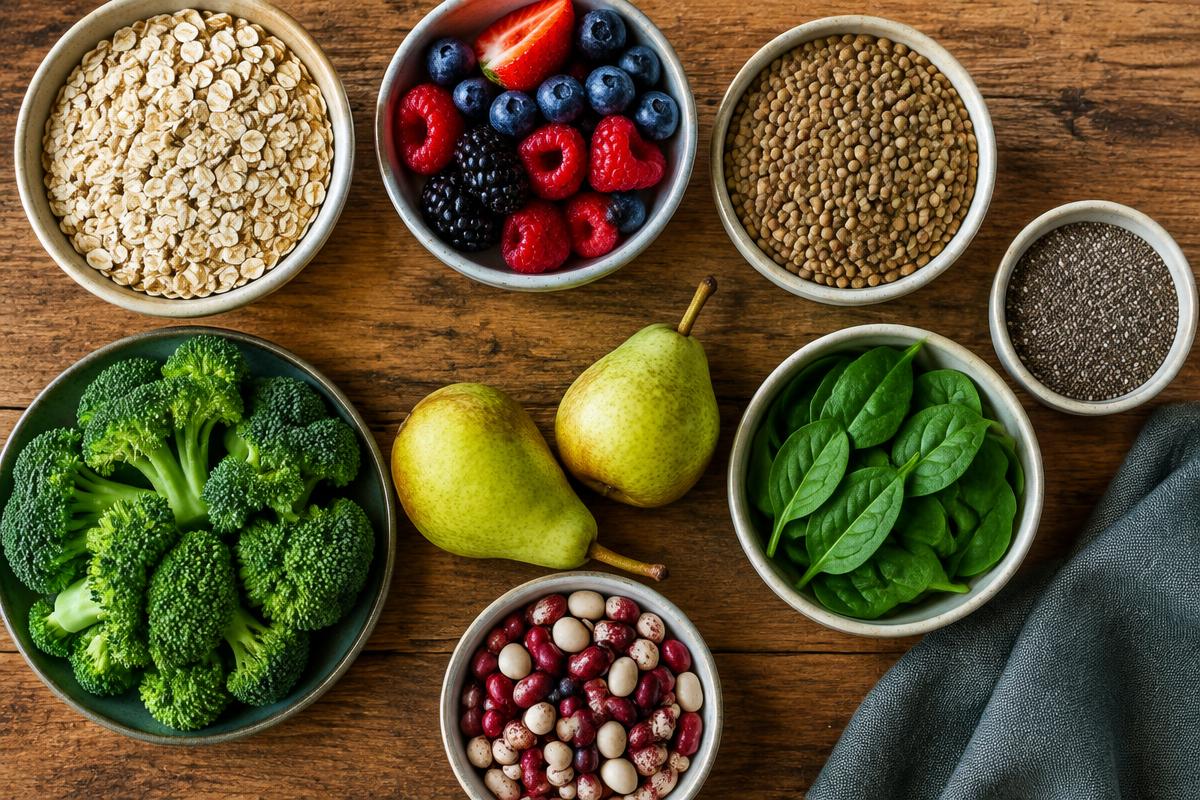
Of all the dietary factors studied in relation to gut bacteria and estrogen metabolism, fiber has the most consistent supporting evidence. Dietary fiber is fermented by gut bacteria and appears to influence the gut environment in ways that may reduce excess beta-glucuronidase activity, supporting more estrogen elimination rather than recirculation. Fiber also has well-established benefits for blood sugar regulation, cholesterol, bowel regularity, and overall gut bacterial diversity, independent of any estrogen-specific effect.
Good sources include vegetables, fruit, legumes, whole grains, nuts, and seeds. Most adults in the United States fall short of the commonly recommended 25 to 35 grams of fiber per day, so increasing intake gradually — to avoid bloating — is a reasonable, low-risk step regardless of whether it meaningfully changes estrogen metabolism for a given individual.
Fermented Foods and Probiotics: Promising but Preliminary
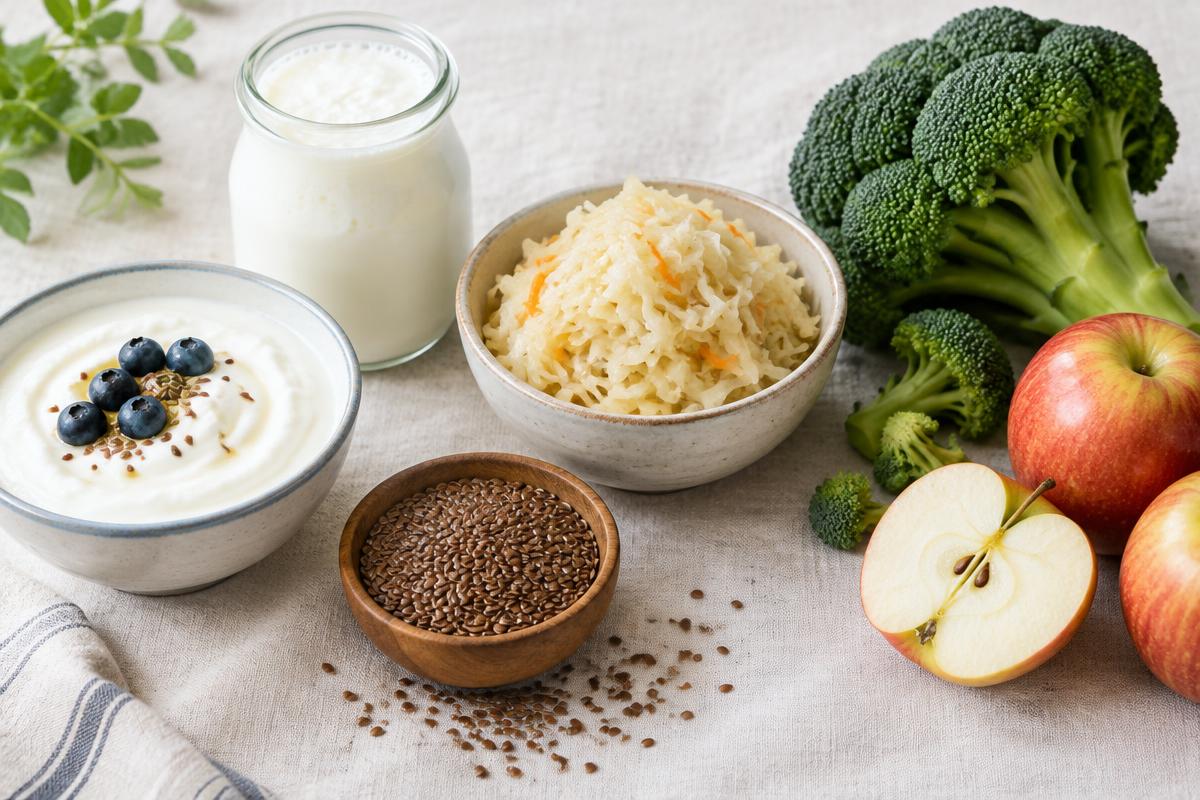
Fermented foods such as yogurt, kefir, sauerkraut, kimchi, and miso introduce live bacteria and other compounds that may support gut diversity. Some small studies suggest fermented foods can modestly increase microbiome diversity over several weeks. However, direct evidence connecting fermented food intake to measurable changes in estrogen metabolism or menopausal symptoms in humans remains limited. They are a reasonable addition to a varied diet for people who tolerate them, but they should not be marketed or understood as a hormone treatment.
Probiotic supplements are an even less settled area. Effects vary significantly by strain, dose, and individual, and there is no single probiotic currently proven to reliably correct hormone-related symptoms. If you are considering a probiotic or other gut-focused supplement, it is worth discussing with your provider, particularly if you are also managing other health conditions. Our health supplements page describes how the practice approaches these decisions.
What This Means for Your Hormone Symptoms
If you are dealing with hot flashes, irregular cycles, mood changes, or other symptoms associated with perimenopause or menopause, improving fiber intake and overall diet quality is a sensible, low-risk habit that supports general health — but it should not be relied on as the primary treatment for disruptive symptoms. The estrobolome is one small piece of a much larger hormonal picture that includes ovarian hormone decline, thyroid function, stress, sleep, and body composition.
A thorough evaluation, including a review of your symptoms, history, and relevant labs through metabolic lab testing, gives a clearer and more actionable picture than diet changes alone. For many women, combining reasonable nutrition habits with appropriately prescribed treatment — when indicated — offers more reliable symptom relief than either approach by itself. Our perimenopause and hormone replacement guide offers a broader overview of treatment options for this life stage.
A Realistic, Balanced Approach
It's reasonable to eat a fiber-rich, varied diet with some fermented foods because it supports overall health, not because it is a proven fix for hormone imbalance. Be cautious of any product or program claiming to definitively 'heal your estrobolome' or guarantee hormone rebalancing through gut interventions alone — the science is not there yet. If gut symptoms like bloating, irregular bowel habits, or discomfort are prominent alongside hormone symptoms, mention both at your visit so they can be considered together.
How the Gut Microbiome Changes With Age and Menopause
Separate from the estrobolome specifically, research shows that the overall composition of the gut microbiome shifts with age and, in women, around the menopause transition. Declining estrogen appears to be associated with changes in microbial diversity, though researchers are still working out the direction and significance of these changes. This is an active area of study, and much of it remains correlational rather than clearly cause-and-effect, which is an important distinction when evaluating any product that claims to 'fix' your microbiome for hormone purposes.
It is also worth noting that microbiome composition is highly individual and can be influenced by diet, medications including antibiotics, stress, sleep, and even geography. A single stool test snapshot cannot fully capture this complexity, and interpreting it in the context of hormone health specifically is still more art than established science at this point.
Other Diet and Lifestyle Factors Worth Considering
Beyond fiber and fermented foods, a few other general habits support both gut health and overall hormone-related wellbeing: staying adequately hydrated, moderating alcohol intake, limiting ultra-processed foods high in added sugar, and getting regular physical activity, which has its own independent relationship with gut bacterial diversity. None of these are hormone treatments, but together they form a reasonable foundation that supports the body broadly while any specific hormone concerns are being evaluated separately.
If you notice that certain foods consistently worsen bloating, fatigue, or other symptoms, keeping a simple log for a couple of weeks can help you and your provider identify patterns worth discussing, separate from assumptions about hormone impact.
Trusted Sources
For further reading, see the NIH National Library of Medicine, The Menopause Society, the American College of Obstetricians and Gynecologists (ACOG), and the Endocrine Society.
Care Available in Stroudsburg and by Telehealth
Simone Blount, FNP-BC, offers in-person visits in Stroudsburg, PA, and telehealth appointments for patients in Pennsylvania, New Jersey, New York, and Delaware. If you want to discuss how nutrition and gut health fit into your broader hormone care plan, learn more about how visits work or explore our resources.
Frequently asked questions
- What is the estrobolome?
- The estrobolome is the collection of gut bacteria that produce an enzyme influencing how much estrogen the body reabsorbs versus eliminates after the liver processes it. It is a real biological pathway, though its overall impact on hormone levels varies by individual.
- Can changing my gut bacteria balance my hormones?
- Diet and gut health may play a supporting role, but current evidence does not show that gut-focused changes alone reliably correct hormone imbalances or treat menopausal symptoms. Other factors, including ovarian hormone decline, usually matter more.
- Does fiber really affect estrogen levels?
- Fiber has the most consistent supporting evidence among dietary factors studied in this area, and it also benefits blood sugar, cholesterol, and bowel regularity regardless of any hormone-specific effect.
- Should I take a probiotic for hormone balance?
- There is no single probiotic currently proven to reliably correct hormone-related symptoms. Effects vary by strain and individual, so discuss any supplement with your provider, especially if you have other health conditions.
- Is there a test for my estrobolome?
- Some commercial microbiome tests claim to assess estrobolome balance, but the science behind interpreting these results and turning them into specific treatment recommendations is not well established.
- What foods support gut health related to hormones?
- Vegetables, fruit, legumes, whole grains, and fermented foods like yogurt and kefir are reasonable choices that support overall gut diversity, though they should be seen as general health habits rather than a hormone treatment.
- Should I rely on gut health changes instead of hormone therapy?
- No. For disruptive menopausal or hormone-related symptoms, a full evaluation and appropriately prescribed treatment, when indicated, tend to offer more reliable relief than diet changes alone.
- Can I discuss gut health and hormone concerns by telehealth?
- Yes. Best Version of You provides in-person care in Stroudsburg, PA, and telehealth visits for patients in Pennsylvania, New Jersey, New York, and Delaware.
Talk it through with Simone
Comprehensive labs, a one-on-one review and a plan built for you — in person in Stroudsburg, PA or by telehealth in PA, NJ, NY and DE.
Book Today