Fiber has a well-earned reputation for supporting weight management, but it is also one of the most common causes of new bloating and digestive discomfort when added too quickly or in the wrong form. Understanding the different types of fiber, how they behave in the gut, and how to increase intake gradually can help you get the benefits without the uncomfortable side effects.
This is especially relevant for patients using GLP-1 medications, where digestion is already slower than usual. At Best Version of You in Stroudsburg, PA, nutrition guidance is part of medical weight loss care, and fiber questions come up at nearly every visit.
Soluble vs. Insoluble Fiber: What's the Difference?
Soluble fiber dissolves in water and forms a gel-like substance in the gut. It is found in oats, beans, lentils, apples, citrus fruit, and psyllium. Soluble fiber can help slow digestion, support healthy blood sugar and cholesterol levels, and feed beneficial gut bacteria. Insoluble fiber does not dissolve and instead adds bulk to stool, which supports regular bowel movements. It is found in whole grains, wheat bran, nuts, seeds, and the skins of many fruits and vegetables.
Most whole foods contain a mix of both types. Someone dealing with constipation may benefit from more insoluble fiber alongside fluids, while someone with loose stools or blood sugar concerns may do better emphasizing soluble sources. There is no single fiber type that is right for everyone, which is why abrupt, generic fiber supplementation sometimes backfires.
Why Fiber Can Cause Bloating
Bloating after increasing fiber usually comes from gut bacteria fermenting the new fiber, producing gas, combined with not drinking enough fluid to let the fiber do its job of adding bulk and moving things along. Jumping from a low-fiber diet to 30+ grams a day overnight is one of the most common causes of new bloating, cramping, or gas that people mistake for a food intolerance.
The fix is usually not avoiding fiber altogether, but ramping up gradually — adding roughly 5 grams every few days rather than all at once — while increasing water intake alongside it. Most people's digestive systems adapt within one to two weeks of a gradual increase.
A Practical Way to Ramp Up Fiber
Start by identifying your current rough fiber intake and adding one fiber-rich food at a time: a half cup of oats at breakfast, a serving of berries, a small portion of beans in a soup or salad, or a slice of whole-grain bread in place of white bread. Give your gut several days to adjust before adding the next change. Pair fiber increases with adequate water, since fiber without enough fluid can worsen constipation rather than relieve it.
If you are using a fiber supplement such as psyllium husk, start with a small dose and increase slowly, mixing it well and drinking a full glass of water with it. Supplements are not required for everyone; many people can reach their fiber goals through food alone with some planning.
Fiber While Taking a GLP-1 Medication
GLP-1 medications already slow stomach emptying, which is part of why they reduce appetite. Adding a large amount of fiber on top of that slower digestion can increase feelings of fullness, bloating, or discomfort if done too quickly. On a GLP-1, it is especially important to increase fiber gradually and in small portions rather than trying to eat a large salad or bean-heavy meal in one sitting.
Our guide on what to eat while taking a GLP-1 goes into more detail on building balanced, tolerable meals, and our article on the best diet for GLP-1 weight loss discusses how fiber fits alongside protein and fluids. If bloating or constipation is already a problem, review it with your prescriber before adding more fiber, since dose or titration adjustments may be part of the solution as discussed in our GLP-1 side effects guide.
How Much Fiber Should You Aim For?
General guidance suggests roughly 25 to 30 grams of fiber per day for most adults, though individual needs vary with age, sex, and health conditions. People with certain gastrointestinal conditions, a history of bowel obstruction, or specific surgical history may need a different approach, which is another reason to discuss your fiber goals with your provider rather than following a generic online number.
Fiber's role in weight management goes beyond digestion: it adds volume and chewing time to meals, which can support fullness, and some types may help moderate blood sugar response after eating. Paired with protein, this makes meals more satisfying on fewer calories. For a broader look at building meals, comprehensive metabolic lab testing can help identify whether blood sugar or cholesterol patterns should also shape your fiber choices.
Fiber-Rich Foods Worth Building Meals Around
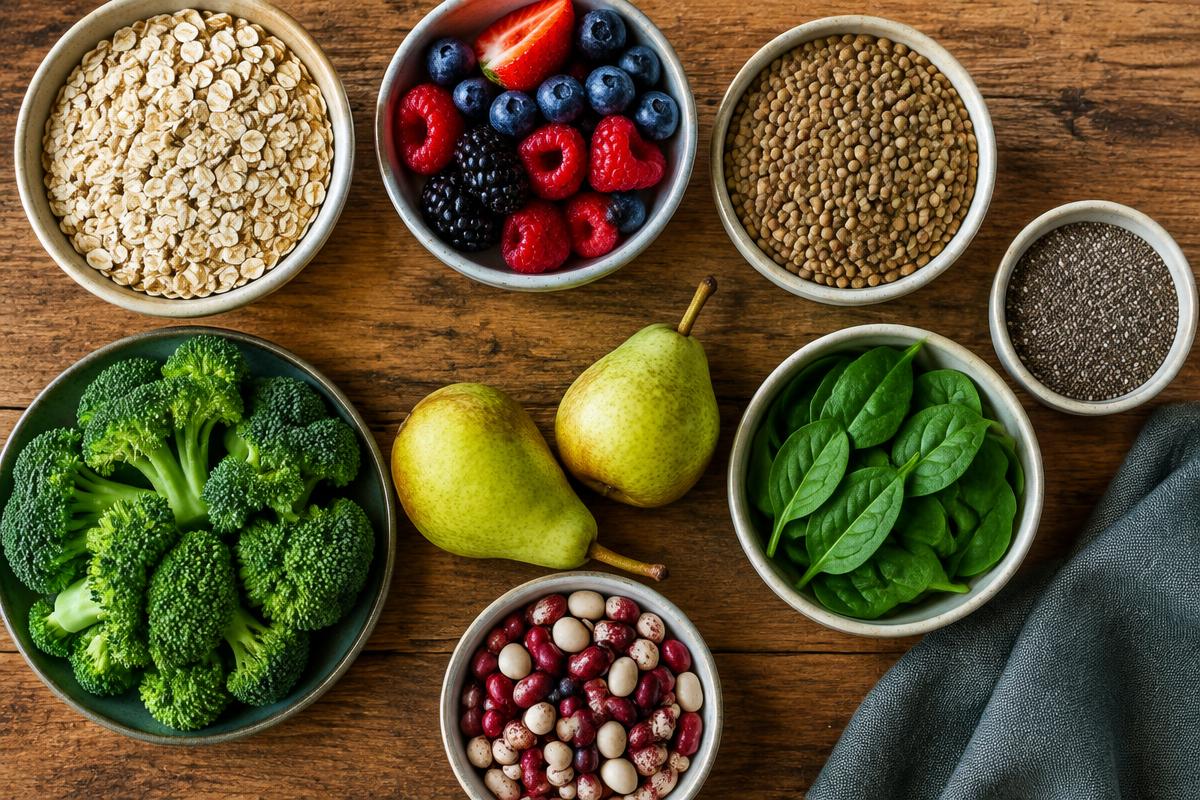
Rather than thinking in terms of grams alone, it can help to picture specific foods you can rotate through the week. Oats and chia seeds work well at breakfast and provide soluble fiber that also helps meals feel more substantial. Lentils, chickpeas, and black beans are inexpensive, versatile sources that can be added in small amounts to soups, grain bowls, or salads. Berries tend to be lower in sugar than many fruits while still providing meaningful fiber, making them a reasonable choice for people also watching blood sugar. Vegetables such as broccoli, carrots, and leafy greens, especially when cooked rather than raw, are often easier to tolerate in larger portions than raw salads, particularly for people on a GLP-1 medication.
Whole grains such as quinoa, farro, and 100% whole-wheat bread provide fiber along with other nutrients that refined grains lack. Nuts and seeds offer fiber alongside healthy fats and protein, though portion size matters since they are calorie-dense; a small handful is usually enough to add meaningful fiber without excess calories.
Fiber and Blood Sugar: Why Timing Can Matter
Fiber consumed alongside carbohydrates can slow the rise in blood sugar that follows a meal, which may help with energy stability and appetite control later in the day. For this reason, some people find it helpful to eat a source of fiber, such as vegetables or a salad, before or alongside the more refined parts of a meal rather than saving fiber-rich foods for last or skipping them altogether. This is a general principle rather than a strict rule, and individual responses vary, so paying attention to how your own body responds to different meal structures is reasonable.
When Bloating Might Signal Something Other Than Fiber
While new or increased fiber intake is a common and usually benign cause of bloating, persistent bloating that does not improve after a few weeks of gradual fiber increases, especially if accompanied by significant pain, unintended weight loss, blood in the stool, or a noticeable change in bowel habits, deserves medical evaluation rather than being assumed to be a fiber issue. Conditions such as irritable bowel syndrome, food intolerances, or other gastrointestinal conditions can also cause bloating and may need a different approach than simply adjusting fiber intake.
Trusted sources
For additional guidance, see the NIDDK's information on fiber and digestive health, the FDA's dietary fiber labeling guidance, and the CDC's recommendations on dietary fiber intake.
Nutrition Support in Stroudsburg and by Telehealth
Simone Blount, FNP-BC, provides individualized nutrition guidance, including fiber and bloating strategies, as part of weight-management care in person in Stroudsburg, PA, and by telehealth in Pennsylvania, New Jersey, New York, and Delaware. See how visits work to get started.
Frequently asked questions
- Why does increasing fiber cause bloating?
- Bloating often results from gut bacteria fermenting newly added fiber, especially when fiber is increased quickly or without enough fluid intake. Gradual increases usually reduce this effect.
- What's the difference between soluble and insoluble fiber?
- Soluble fiber dissolves in water and forms a gel that can support blood sugar and cholesterol levels; insoluble fiber adds bulk to stool and supports regularity. Most foods contain a mix of both.
- How much fiber should I eat per day?
- General guidance suggests roughly 25 to 30 grams daily for most adults, though individual needs vary. Certain digestive conditions may require a different approach, best discussed with your provider.
- How quickly should I increase my fiber intake?
- A gradual increase, such as adding about 5 grams every few days along with more water, is generally better tolerated than a sudden jump to a high-fiber diet.
- Is fiber harder to tolerate while taking a GLP-1 medication?
- It can be, since GLP-1 medications already slow digestion. Adding fiber gradually and in smaller portions is usually more comfortable than large fiber-heavy meals.
- Are fiber supplements necessary?
- Not for everyone. Many people can meet fiber goals through food alone with some planning, though supplements like psyllium husk can help when started slowly and with adequate water.
- Can fiber help with weight loss?
- Fiber can support fullness and may help moderate blood sugar response, which can support a weight-management plan when combined with adequate protein and overall balanced nutrition.
- Is nutrition guidance available by telehealth?
- Yes. Best Version of You offers nutrition support in person in Stroudsburg, PA, and by telehealth for patients in Pennsylvania, New Jersey, New York, and Delaware.
Talk it through with Simone
Comprehensive labs, a one-on-one review and a plan built for you — in person in Stroudsburg, PA or by telehealth in PA, NJ, NY and DE.
Book Today