The best diet for GLP-1 weight loss is not a named diet or a list of forbidden foods. It is an eating pattern you can tolerate and repeat: put protein first, include produce and fiber-rich carbohydrates, use small portions, drink fluids regularly, and eat enough to stay nourished. Semaglutide and tirzepatide can make you feel full sooner and less interested in food. That makes meal quality more important, not less.
If you are looking for a printable menu, start with the sample day below. If you want to know whether keto, intermittent fasting, or a Mediterranean-style pattern is best, the comparison is here too. At Best Version of You in Stroudsburg, PA, GLP-1 medical weight loss includes nutrition support alongside clinical follow-up. Your needs may differ if you have diabetes, kidney disease, a history of disordered eating, or another medical condition.
Is There One Best Diet to Follow on a GLP-1?
No specific diet is required to make a GLP-1 medication work. The medicine affects appetite and digestion; food choices affect how well you feel, whether you meet your nutrient needs, and how much strength you keep as your weight changes. The most useful plan is flexible enough to survive workdays, family meals, restaurants, and the occasional day when nausea makes your usual meal unappealing.
A Mediterranean-style pattern is a sensible starting point for many adults because it offers vegetables, fruit, beans, whole grains, fish, olive oil, and other minimally processed foods without banning entire food groups. On a GLP-1, however, a huge salad or bean-heavy bowl may feel uncomfortable. Adapt the pattern to smaller servings and gradually increase fiber. The goal is not to force down a perfect plate when your stomach says stop.
Keto is not required. Very high-fat meals can be hard to tolerate when stomach emptying is slower, and cutting out fruit, beans, or whole grains can make fiber harder to get. Intermittent fasting is not required either; a short eating window can leave too few chances to get protein and fluids. If a particular approach fits your preferences and health history, review it with your clinician rather than assuming everyone on a GLP-1 needs the same rules.
The Four Priorities: Protein, Produce, Fiber, and Fluids
Put protein on the plate first
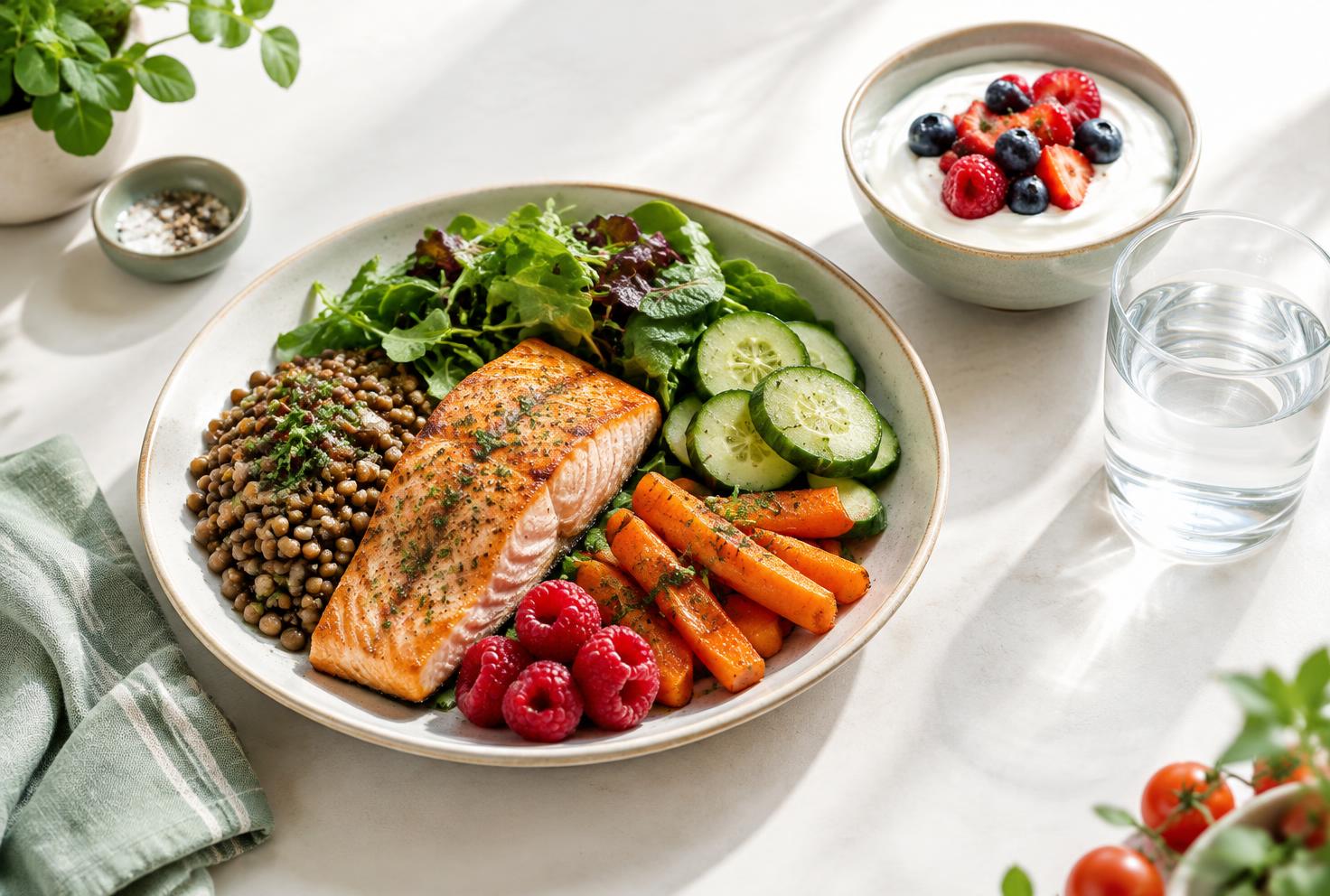
Weight loss can involve both fat and lean tissue. Protein and resistance exercise help support muscle during that process. Try including a protein source whenever you eat: eggs, Greek yogurt, cottage cheese, fish, chicken, tofu, tempeh, beans, or a protein shake when a solid meal is difficult. A small portion of salmon with vegetables may be easier to finish than a large mixed plate if you are already full.
There is no one protein number that is safe or appropriate for everybody. Your body size, age, activity, kidney health, and overall intake matter. Ask your provider or a registered dietitian to set a target if you are unsure. Spreading protein across breakfast, lunch, and dinner is often more practical than trying to make up for a low-protein day at night. If your appetite is so low that you regularly cannot eat meals, discuss your dose and nutrition plan rather than simply skipping food.
Choose produce and fiber you can tolerate
Colorful produce brings nutrients that a protein shake alone cannot provide. Cooked vegetables can be gentler than large raw salads. Oats, berries, beans, lentils, whole-grain toast, and fruit can provide fiber; portions can be modest. Fiber supports bowel regularity, but adding a lot at once may cause bloating. Increase it slowly, and drink enough with it. If you already have significant constipation or abdominal discomfort, ask your clinician before loading up on fiber supplements.
Drink steadily rather than catching up at night
Appetite changes can make it easy to forget fluids, and vomiting or diarrhea can make dehydration more likely. Keep water nearby and sip across the day; unsweetened tea and broth can also count. Some people prefer to drink between meals because a large drink with food makes them feel too full. A universal water quota is not appropriate for people with fluid restrictions or certain heart or kidney conditions, so use the guidance from your own clinician.
What Does a GLP-1-Friendly Day of Eating Look Like?
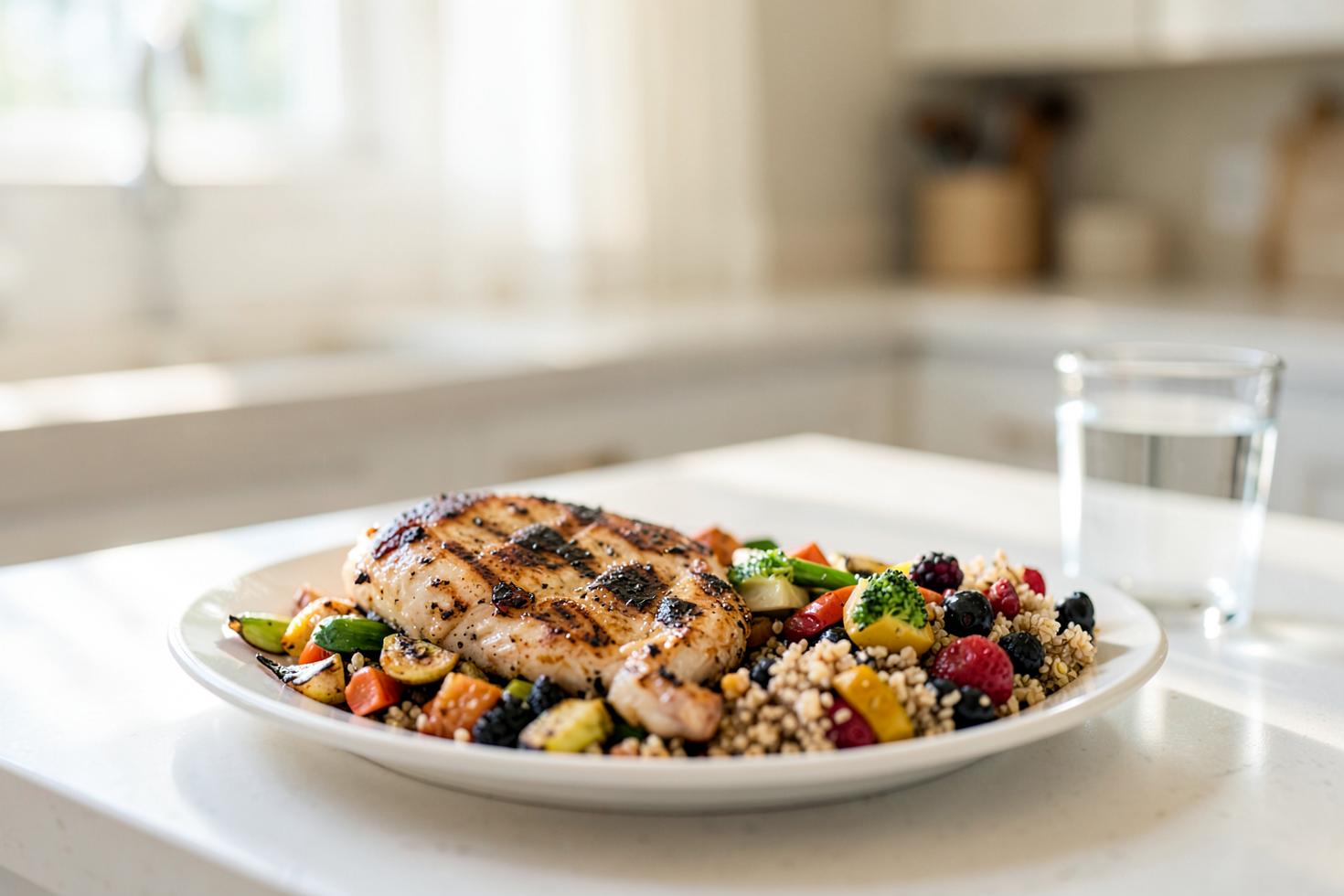
Here is a flexible example, not a prescribed calorie plan. Breakfast might be plain Greek yogurt with berries and a spoonful of oats, or eggs with a slice of whole-grain toast. Lunch could be salmon, chicken, or tofu with a small serving of lentils and cooked vegetables. Dinner might be turkey or beans with roasted carrots and a little rice. If a full meal is too much, divide it into two smaller sittings. A snack such as cottage cheese, edamame, fruit with nut butter, or a protein-rich smoothie can fill a gap.
A useful way to build any meal is to start with the protein, add a vegetable or fruit, then add a comfortable portion of a fiber-rich carbohydrate and some fat for flavor. You do not have to weigh every ingredient. On low-appetite days, a half portion is reasonable if you can return for the rest later. If an entire day goes by with only coffee and a few bites, that is not a successful diet day; it is a reason to speak with your care team.
Simple swaps for different needs
For a vegetarian meal, try tofu with rice and cooked spinach, or lentil soup with a side of Greek yogurt if you eat dairy. For a busy workday, pair a ready-to-eat protein option with fruit and a whole-grain cracker rather than relying on an energy drink. If you have diabetes and take insulin or a sulfonylurea, changing how much you eat may alter your risk of low blood sugar; review your medications and glucose plan with your prescriber.
What Should You Eat When Nausea Hits?
Smaller portions, slower eating, and stopping before you feel overly full often help. Rich fried foods, heavy sauces, very spicy meals, and alcohol may make nausea worse for some people, especially after a dose increase. On an unsettled day, try a few bites of toast, crackers, rice, soup, banana, or a mild protein such as yogurt, egg, or chicken as tolerated. Return to more varied meals when symptoms ease.
Do not force a greasy takeout meal because it fits your old routine, but do not assume you have to eliminate every food you enjoy forever. Keep notes on which foods and portion sizes bother you. If nausea prevents you from eating or drinking, vomiting persists, or you feel dizzy, contact your prescriber. The answer may be a change in how quickly the dose increases, not a stricter diet. Read our GLP-1 side effect guide for more practical strategies.
What If You Are Constipated?
Constipation can happen while taking GLP-1 medicines, especially if you are eating and drinking much less than before. Start with regular fluids, gentle movement, and tolerable fiber foods such as oatmeal, fruit, and cooked vegetables. Increase gradually. If those changes do not help, ask your clinician about an appropriate treatment instead of adding several supplements at once. Severe pain, vomiting, or inability to pass stool or gas needs prompt medical assessment.
If constipation makes you afraid to eat, let the office know. The same goes for reflux, ongoing diarrhea, or repeated nausea. A plan that is tolerable is better than quietly enduring symptoms while the scale moves. Our guide to what to eat while taking a GLP-1 also covers day-to-day food choices.
How to Protect Muscle While Losing Weight
Food is only part of muscle preservation. If you are able, include strength work appropriate to your fitness level: chair stands, resistance bands, weights, or supervised training. Start where you are and progress gradually. Notice whether you are maintaining the ability to climb stairs, carry groceries, and recover from activity. A lower number on the scale is not the whole story if you feel weaker.
Share changes in strength, fatigue, hair shedding, or very low intake at follow-up. Your clinician can review the pace of loss, symptoms, labs when indicated, and whether nutrition support is needed. See comprehensive metabolic testing for how broader health factors can be evaluated. If weight loss has slowed, why a GLP-1 plateau happens addresses common causes without encouraging crash dieting.
What About Supplements and Meal-Replacement Shakes?
A shake can be useful when it helps you meet a real protein need and you still eat a range of whole foods. It is not a substitute for every meal indefinitely. Check the label for protein, added sugar, and ingredients you tolerate. A multivitamin or other supplement may be appropriate in some situations, but taking more products does not make the medication work better. Discuss supplements and interactions with your provider; our health supplements page explains the practice's approach.
When to Call Your Provider Instead of Changing Your Diet
Seek urgent medical care for severe or persistent abdominal pain, especially if it spreads to the back, or for abdominal pain with repeated vomiting; these can be signs of serious problems including pancreatitis. Upper-right abdominal pain, fever, or yellowing of the eyes or skin may suggest a gallbladder problem. Persistent vomiting, inability to keep liquids down, or signs of dehydration also need medical attention. Do not try to solve these symptoms by eating less or taking another injection.
For everyday questions, bring a short food and symptom record to your follow-up: what you could eat, how much you drank, bowel changes, activity, and when symptoms occurred relative to your dose. That gives your provider something actionable. You can also review the FDA's Wegovy prescribing information and the University of Wisconsin's food guidance for people taking GLP-1 medicines for additional context.
Build a Plan That Fits Your Life in Stroudsburg or by Telehealth
The best GLP-1 diet is the one that gets enough nourishment into your smaller meals while making side effects manageable. Start by adding a protein choice to each meal, a manageable amount of produce and fiber, and regular fluids. Then adjust based on how you feel rather than chasing a perfect internet meal plan. Simone Blount, FNP-BC, offers GLP-1 medical weight loss in Stroudsburg, PA and by telehealth in PA, NJ, NY, and DE. Learn how visits work or Book Today to discuss your options.
Frequently asked questions
- What is the best diet for GLP-1 weight loss?
- No named diet is required. A practical pattern includes protein with meals, vegetables or fruit, fiber-rich carbohydrates in tolerated portions, and regular fluids. Small meals may be easier to tolerate than large ones. Individual needs depend on your health history and medication.
- Should I do keto while taking semaglutide or tirzepatide?
- Keto is not necessary. Some high-fat foods can worsen nausea, while excluding beans, fruit, and whole grains may make fiber harder to get. Ask your clinician if a restricted diet fits your health needs before starting it.
- How much protein do I need on a GLP-1?
- Protein needs vary with body size, age, activity, kidney health, and how much you are eating overall. Include a protein source at each meal and ask your clinician or a registered dietitian to set an individualized target rather than relying on one number for everyone.
- Can I skip meals if I am not hungry on a GLP-1?
- An occasional missed meal can happen, but repeatedly eating very little makes it harder to meet protein and other nutrient needs. If you routinely cannot eat or drink enough, contact your prescriber to review your treatment plan.
- What foods help with GLP-1 nausea?
- Try smaller, slower meals and simple foods you tolerate, such as toast, rice, soup, yogurt, or eggs. Fried, rich, and very large meals may worsen symptoms. Persistent vomiting or inability to keep fluids down needs medical attention.
- How can I prevent constipation on a GLP-1?
- Drink regularly if you have no fluid restriction, move as able, and gradually add tolerable fiber foods such as oats, berries, and cooked vegetables. If constipation persists or comes with severe pain or vomiting, contact a clinician.
- Do I need a meal plan while taking a GLP-1?
- A rigid plan is not required, but a few default meals can help when appetite is low. Build them around protein, produce, and a manageable serving of high-fiber carbohydrate. Nutrition support can help adapt meals to your medical history and symptoms.
- Is intermittent fasting a good idea on a GLP-1?
- It is not required and can make protein and fluid intake harder when appetite is already low. Discuss any prolonged fasting plan with your clinician, especially if you take medicines that can cause low blood sugar.
Talk it through with Simone
Comprehensive labs, a one-on-one review and a plan built for you — in person in Stroudsburg, PA or by telehealth in PA, NJ, NY and DE.
Book Today