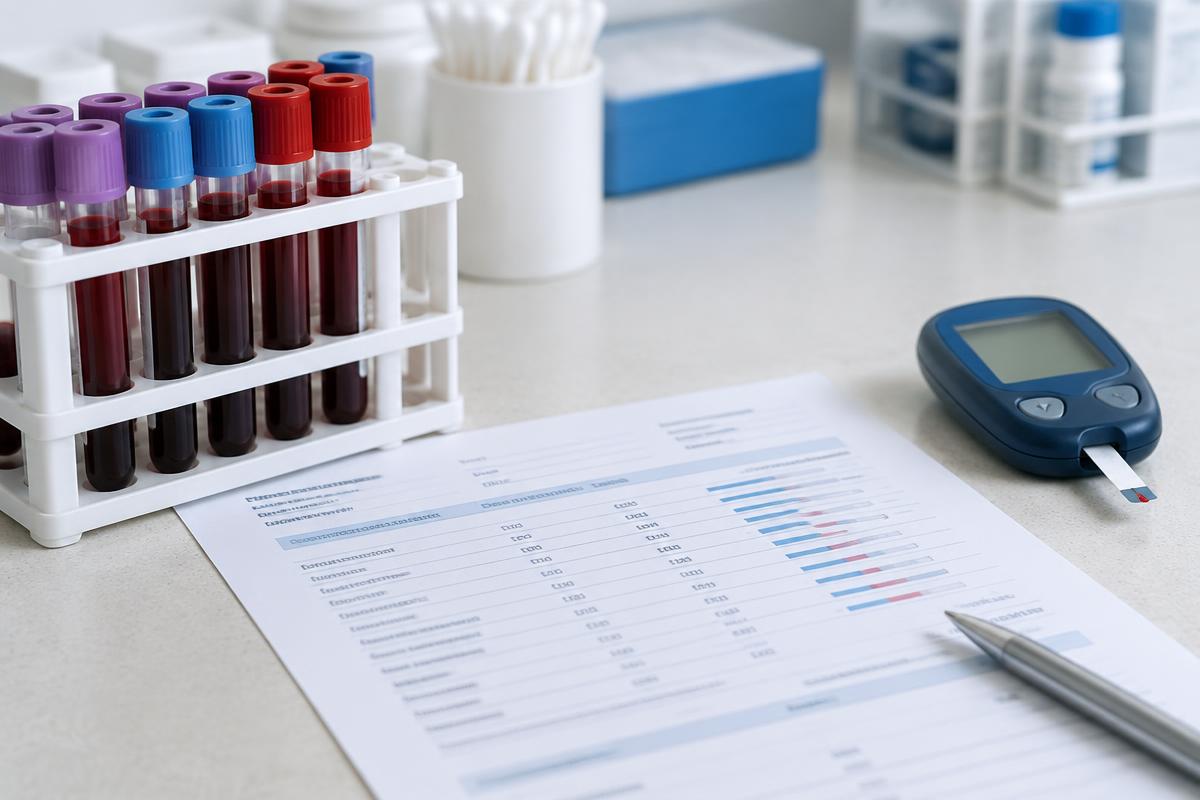
A normal A1C is reassuring, but it is not the same as a clean bill of metabolic health. A1C reflects average blood sugar over roughly the past two to three months. Insulin resistance — a state where your cells respond sluggishly to insulin, forcing the pancreas to produce more of it to keep glucose in range — can be present for years before blood sugar itself drifts high enough to move the A1C. By the time A1C rises, insulin resistance has often already been present for a long time.
This is one of the more frustrating experiences patients describe: fatigue after meals, stubborn abdominal weight, trouble losing fat despite effort, and a family history of type 2 diabetes, yet a basic metabolic panel and A1C that come back "normal." At Best Version of You, we see this pattern often in Stroudsburg, PA and across the Poconos, and we offer comprehensive metabolic lab testing in person in Stroudsburg and by telehealth in PA, NJ, NY, and DE to look earlier and more specifically.
Why A1C Can Miss Early Insulin Resistance
A1C measures glycated hemoglobin — essentially, how much sugar has attached to red blood cells over their roughly three-month lifespan. In early insulin resistance, the pancreas compensates by secreting extra insulin, and that extra insulin can successfully keep glucose — and therefore A1C — in a normal range for a long time. The compensation has a cost: chronically elevated insulin is associated with weight gain, particularly around the abdomen, higher blood pressure, altered cholesterol patterns, and increased cardiovascular risk, even while the A1C still looks unremarkable.
A1C can also be affected by factors unrelated to average glucose, including certain anemias, hemoglobin variants, pregnancy, and some chronic illnesses, which can make it falsely reassuring or falsely elevated in specific individuals. None of this means A1C is not useful — it remains an important screening tool — but it is one piece of a larger picture, not the whole picture.
What Fasting Insulin and HOMA-IR Add
A fasting insulin level, drawn alongside a fasting glucose, can reveal the compensatory overproduction of insulin long before glucose control starts to slip. When fasting insulin is elevated but fasting glucose is still normal, that pattern itself is informative: it suggests the body is working harder than it should to keep sugar in range.
HOMA-IR (Homeostatic Model Assessment of Insulin Resistance) is a calculation that combines fasting glucose and fasting insulin into a single estimate of how resistant your tissues are to insulin's effects. It is not a perfect test and reference ranges vary somewhat by lab and population, but trends over time, paired with symptoms and other labs, can help a clinician decide whether intervention is warranted well before diabetes develops.
Other Clues: Triglyceride/HDL Ratio and Waist Circumference
A standard lipid panel can offer another early signal. A high triglyceride level paired with a low HDL ("good") cholesterol level — sometimes summarized as the triglyceride-to-HDL ratio — is a commonly used marker associated with insulin resistance, even when LDL cholesterol looks acceptable. This pattern often shows up before A1C changes and is inexpensive to check as part of routine bloodwork.
Waist circumference is a simple, free measurement that correlates with visceral fat — the fat stored around abdominal organs that is most closely tied to insulin resistance, as opposed to fat stored elsewhere on the body. A waist measurement that has crept up, even without major weight gain on the scale, can be a meaningful clue. Blood pressure trends and a history of irregular periods or polycystic ovary syndrome in women can also point toward underlying insulin resistance.
Who Should Consider Looking Deeper Than A1C
It is reasonable to ask for a closer look if you have a parent or sibling with type 2 diabetes, carry extra weight around the midsection, have been told your triglycerides or blood pressure are borderline, have a history of gestational diabetes or PCOS, or simply feel like your energy and appetite do not match what your labs say should be happening. A one-size-fits-all annual panel often is not enough to catch this early; targeted testing is more useful when there is a specific concern.
If you are already considering medical weight loss or have struggled with a plateau despite reasonable effort, insulin resistance is a common contributor worth ruling in or out. Our guide on labs to check before starting a weight loss program walks through what a thorough baseline workup typically includes, and our metabolic lab testing guide explains the specific markers in more detail.
What Happens If Insulin Resistance Is Found
Finding insulin resistance early changes the conversation from "wait until it becomes diabetes" to "intervene now while the changes are easier to make." Depending on the full picture, a plan may include dietary changes that lower the glycemic load of meals, strength training to improve how muscle uses glucose, attention to sleep and stress (both of which affect insulin sensitivity), and in some cases medication. Some patients benefit from medical weight loss support, which can improve insulin sensitivity as excess visceral fat decreases.
Thyroid function is also worth checking in this context, since undiagnosed thyroid problems can compound fatigue and weight issues that get mistakenly attributed only to insulin resistance — our article on subclinical hypothyroidism and weight loss covers that overlap. A broader hormone picture, including for women going through perimenopause, can also matter; see our page on hormone therapy for women if hormonal shifts seem relevant to your symptoms.
How Insulin Resistance Develops Over Time
Insulin resistance rarely appears overnight. It tends to build gradually over years, influenced by a combination of genetics, body composition, activity level, sleep quality, and chronic stress. Excess visceral fat around the abdomen is particularly active hormonally and can release inflammatory signals that make muscle and liver cells less responsive to insulin. Over time, the pancreas compensates by releasing more insulin, and that higher insulin level itself can promote further fat storage, creating a cycle that is easier to interrupt earlier than later.
Sleep deprivation and chronic stress both raise cortisol, a hormone that can antagonize insulin's effects and raise blood sugar even when eating habits have not changed. This is one reason two people with similar diets can have very different metabolic lab results: one may be sleeping seven to eight hours with manageable stress, while the other is running on five hours of sleep with a demanding, high-stress schedule. Addressing sleep and stress is not a minor footnote in an insulin resistance plan; for some patients it is the single most impactful change available.
A Realistic Plan, Not a Crash Diet
Reversing or improving insulin resistance is generally a gradual process, not an overnight fix, and it does not require extreme restriction. Reasonable goals include regular physical activity most days of the week, a sustainable eating pattern with attention to added sugar and refined carbohydrates, adequate protein and fiber, consistent sleep, and periodic rechecking of labs to track progress. Supplements are sometimes discussed as adjuncts, and our health supplements page and supplement guide explain which have reasonable evidence and which do not.
What matters most is not chasing a single lab number but understanding the overall trend: are fasting insulin, triglycerides, waist circumference, and energy levels moving in the right direction over months, not days. That is also why follow-up testing, not just a one-time panel, is part of a responsible plan.
Getting Tested in Stroudsburg or by Telehealth
Simone Blount, FNP-BC, sees patients in person in Stroudsburg, PA, and by telehealth throughout Pennsylvania, New Jersey, New York, and Delaware for metabolic health evaluations, including fasting insulin, HOMA-IR, lipid panels, and related testing. If your A1C looks fine but something still feels off, that is a reasonable starting point for a conversation rather than something to dismiss. Learn more about how telehealth visits work or review how our process works to get started.
The Bottom Line on Normal Labs and Symptoms That Don't Match
If you feel genuinely well and your labs are reassuring, that is a good outcome, not something to second-guess. But if you feel off — unexplained fatigue, weight that will not shift despite effort, cravings that feel disproportionate to hunger — and standard labs look fine, it is reasonable to ask for a more targeted look rather than accepting that nothing can be done. Trust your own observations about your body alongside the numbers, and bring both to the conversation with your provider.
Putting This in Perspective
It can be easy to feel overwhelmed by headlines about chemicals in everyday products. A more productive approach is to treat exposure reduction as one modest, reasonable habit among many, rather than a replacement for the fundamentals of metabolic health: balanced meals, regular movement, adequate sleep, and routine lab monitoring when indicated. If you make a few sustainable changes and otherwise continue focusing on the basics, you are doing what current evidence reasonably supports.
Tracking Your Own Patterns Before Your Visit
Before a visit, it can help to jot down when fatigue is worst during the day, how your sleep has changed, whether certain foods seem to make it worse, and any other symptoms you have noticed, even ones that seem unrelated. This kind of pattern tracking often points a clinician toward the most relevant tests more efficiently than a general complaint of "I'm just tired all the time," and it can make a first visit considerably more productive.
Trusted Sources
For further reading on insulin resistance and prediabetes, see the National Institute of Diabetes and Digestive and Kidney Diseases (NIDDK), part of the NIH, the CDC's prediabetes information, and the American Diabetes Association. The Endocrine Society also publishes patient-facing resources on insulin resistance and metabolic syndrome.
Frequently asked questions
- Can I have insulin resistance with a completely normal A1C?
- Yes. The pancreas can compensate by producing extra insulin, keeping glucose and A1C in a normal range for years before blood sugar control starts to slip. Fasting insulin and HOMA-IR can sometimes catch this earlier than A1C alone.
- What is HOMA-IR and how is it calculated?
- HOMA-IR is a calculation using fasting glucose and fasting insulin to estimate how resistant your tissues are to insulin. It is a useful screening tool alongside symptoms and other labs, though reference ranges vary somewhat by lab.
- Does a normal triglyceride/HDL ratio rule out insulin resistance?
- A favorable ratio is reassuring but does not completely rule it out, since insulin resistance can present differently from person to person. It is one data point among several, including fasting insulin, waist circumference, and symptoms.
- Does waist circumference really matter if my weight is stable?
- Yes, it can. Waist circumference reflects visceral fat around abdominal organs, which is closely linked to insulin resistance, even when total body weight has not changed much.
- Is insulin resistance the same as prediabetes?
- They are related but not identical. Insulin resistance is an underlying mechanism; prediabetes is a glucose-based diagnosis. Insulin resistance can be present before glucose levels rise enough to meet the criteria for prediabetes.
- Can insulin resistance be improved without medication?
- For many people, regular physical activity, dietary changes, better sleep, and reducing excess visceral fat can meaningfully improve insulin sensitivity. Some people also benefit from medication; your clinician can help determine what is appropriate.
- Do I need special testing, or will my annual physical catch this?
- A standard annual panel often does not include fasting insulin or HOMA-IR. If you have risk factors or unexplained symptoms, ask specifically about more targeted metabolic testing.
- Is this type of testing available by telehealth?
- Yes. Metabolic lab evaluation, including ordering labs and reviewing results, is available in person in Stroudsburg, PA and by telehealth throughout Pennsylvania, New Jersey, New York, and Delaware.
Talk it through with Simone
Comprehensive labs, a one-on-one review and a plan built for you — in person in Stroudsburg, PA or by telehealth in PA, NJ, NY and DE.
Book Today